


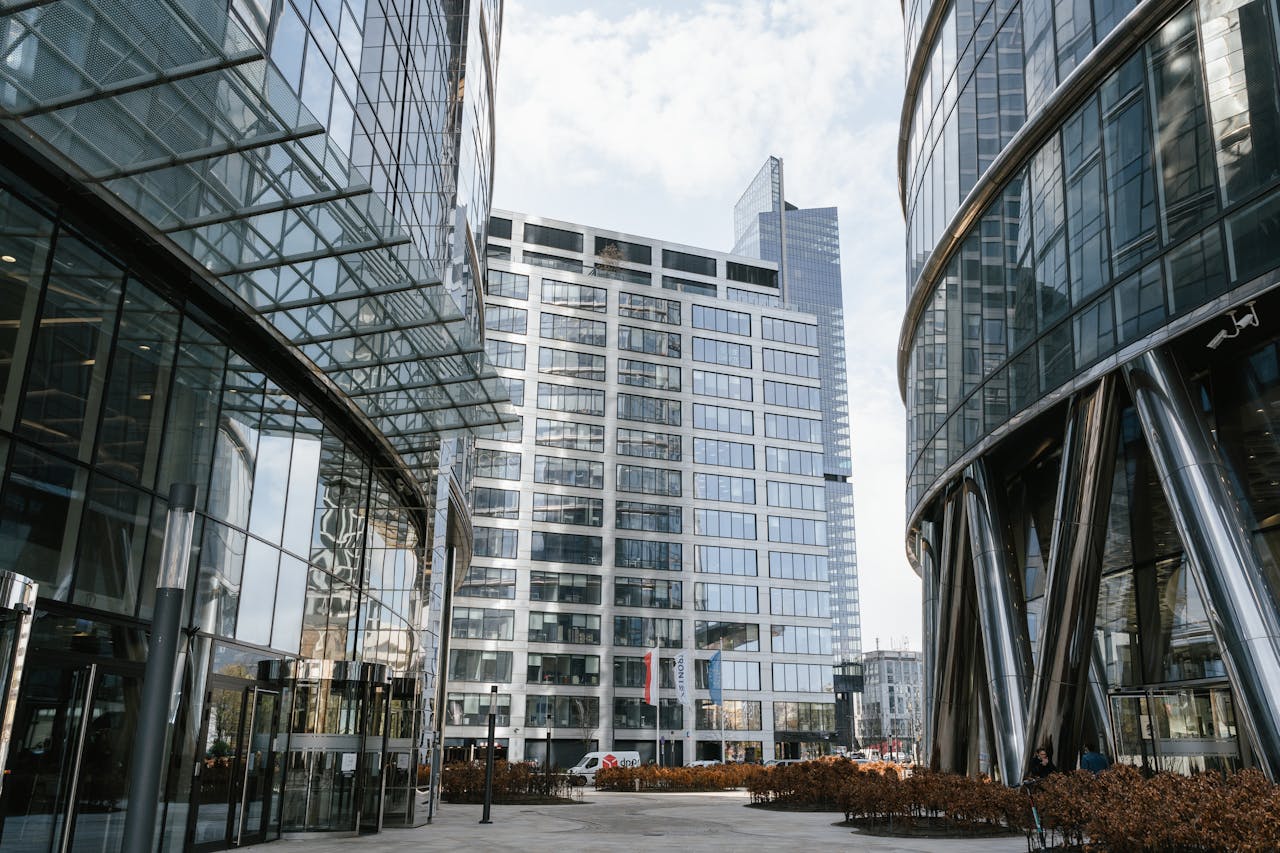
Jakarta has long been Southeast Asia’s most populous metropolis, but a more focused question is now reshaping conversations among investors, economists, and real estate strategists: is the Sudirman corridor evolving into something far greater than a business district? With towers of glass rising along one of Indonesia’s most iconic boulevards, a dense concentration of banks, embassies, and multinational headquarters, and infrastructure investment accelerating despite the country’s capital relocation to Nusantara, the case for Sudirman as a Regional Financial Command Center is not merely speculative. It is increasingly well-supported by data, investment flows, and structural shifts in Southeast Asia’s economic geography.
What Defines a Regional Financial Command Center?
Before assessing Sudirman’s credentials, it is worth establishing what a Regional Financial Command Center actually means. According to frameworks used by financial stability bodies such as SIFMA, a financial command center functions as a hub where critical market infrastructure, risk management, and capital allocation decisions are coordinated. At the regional scale, this concept extends beyond a single institution to encompass an entire urban ecosystem.
A regional financial command center must demonstrate several key qualities: a critical mass of banking and capital markets activity, a robust presence of multinational headquarters, Grade A office infrastructure meeting international standards, deep transportation connectivity, and dense professional networks that produce agglomeration effects, where proximity itself generates economic value.
Research examining whether Taiwan can become a regional financial center, as explored by Kapronasia, illustrates the complexity involved: financial centers require not just infrastructure and capital, but regulatory maturity, talent depth, and international credibility. Sudirman is now being evaluated against exactly these benchmarks.
Why Sudirman Fits the Regional Financial Command Center Model
When measured against these criteria, Sudirman demonstrates a depth and maturity that sets it apart from other candidates in the region. The following factors explain why the corridor has earned serious consideration as a genuine regional financial command center.
Banking and Financial Ecosystem Strength
The Sudirman business district is home to the headquarters or major branch offices of virtually every systemically important bank in Indonesia. Bank Indonesia and the Financial Services Authority (OJK) both maintain critical operations within the corridor, alongside Indonesia’s largest state-owned banks including Bank Mandiri, BNI, and BRI. Add to this a dense concentration of foreign bank branches, securities firms, asset managers, and insurers, and the result is a financial ecosystem with few parallels in ASEAN. The Jakarta CBD financial hub effect is self-reinforcing: the more institutions that locate here, the more valuable the address becomes for the next entrant.
Regional Headquarters Presence
Global firms across financial services, professional services, technology, and energy have established their regional HQ Jakarta operations along this corridor, reflecting confidence that Jakarta offers the market access, talent, and infrastructure needed to manage regional operations from a single base. As Indonesia’s capital relocates to Nusantara, Jakarta’s commercial and financial functions are unlikely to migrate. As analyzed by PT. Serasi Autoraya, the removal of government administration may actually allow Jakarta to sharpen its identity as a pure commercial and financial center.
Also Read: Regional HQ Jakarta: Is Sudirman the Right Choice?
Grade A Office Supply and International Standards
The office space Sudirman Jakarta market has matured considerably, evolving into a sophisticated offering that genuinely competes with Singapore’s Marina Bay or Kuala Lumpur’s KLCC precinct. Developments along the corridor meet WELL Building Standards, green certification requirements, and the technological specifications demanded by financial services tenants with complex IT and security needs.
Strong Transportation Integration
The completion of Jakarta’s MRT system, with the Sudirman corridor served by multiple stations including Setiabudi, has dramatically improved intra-city mobility. The corridor connects northward to the historic commercial center of Kota and southward to emerging nodes in South Jakarta, while toll access to Soekarno-Hatta International Airport enables the executive mobility that financial hub operations require.
Also Read: Transportation in Sudirman: MRT, Traffic, and Accessibility
Business Density and Network Effects
The cafes, hotel lobbies, and shared spaces along the Sudirman strip serve as informal deal rooms where professionals from competing firms encounter one another daily. This kind of network density is precisely what financial economists identify as the underlying mechanism of cluster competitiveness. It cannot be manufactured overnight; it accumulates over decades of co-location, and Sudirman has been building it since the 1980s.
Executive-Level Hospitality Infrastructure
Financial hubs run on relationship capital, and that requires exceptional hospitality. Sudirman’s five-star hotel and serviced apartment landscape, anchored by internationally branded properties with conference facilities and executive amenities, ensures that the client entertainment and accommodation needs of global financial institutions are fully met within the district.
Multinational Investment and Capital Flow in Sudirman
Sudirman’s position as Indonesia’s primary commercial address translates directly into its role as the country’s most significant node for cross-border investment activity. Three dynamics illustrate the scale of this capital concentration.
Foreign Direct Investment Trends
Indonesia has consistently ranked among the top FDI destinations in Southeast Asia, and a disproportionate share of that investment is channeled through structures based in the Sudirman corridor. Multinational investment Sudirman continues to grow, driven by Indonesia’s expanding middle class, digital economy momentum, and significant natural resource endowment. The deal-making infrastructure that facilitates this capital flow, spanning law firms, investment banks, and advisory firms, is concentrated precisely along this corridor.
Financial Services Expansion
The financial services sector in Indonesia remains significantly underpenetrated relative to regional peers, creating exceptional growth runway. Banking penetration, insurance coverage, and capital market participation all trail comparable economies, meaning financial institutions in Jakarta see a long runway of organic growth ahead. This dynamic attracts further entry by regional and global players, reinforcing Sudirman’s position as the address of choice for new market entrants.
Long-Term Infrastructure Development
The infrastructure investment pipeline supporting the Sudirman corridor remains robust. Planned MRT extensions, continued Grade A office development, and technology infrastructure integration are all contributing to a district still in an expansionary phase, signaling strong institutional confidence in Sudirman’s long-term trajectory.
Is Sudirman Positioned to Lead Indonesia’s Financial Future?
Sudirman is not merely positioned to lead Indonesia’s financial future. It is already doing so. Indonesia’s scale as the world’s fourth most populous nation and Southeast Asia’s largest economy means its primary financial district commands capital flows that simply exceed those of smaller regional competitors. The post-capital-relocation dynamic may, paradoxically, accelerate Sudirman’s financial concentration as government administration recedes and commercial activity expands to fill the space.
Regulatory reform, digital infrastructure investment, and the deepening of Indonesia’s capital markets are all tailwinds. For investors, occupiers, and financial institutions assessing where to plant their regional flag, the evidence is compelling. Sudirman is already functioning as a Regional Financial Command Center, and the trajectory points firmly upward.
Experience Sudirman’s Financial Core from Flow
For professionals operating at the intersection of Indonesia’s financial markets and the regional economy, base location matters enormously. Flow, the luxury coworking space crafted by AYANA and nestled within Midplaza at the heart of the Sudirman corridor, offers exactly the environment the district’s most discerning occupants demand.
Steps from Setiabudi MRT Station, Flow combines AYANA’s signature five-star hospitality with world-class design across two expansive floors, featuring light-filled private offices, chic communal areas, and a cafe designed for both focused work and spontaneous networking. Whether you are establishing a regional presence, expanding an existing footprint, or simply need a base that matches the standard of your work, Flow at Midplaza delivers the Sudirman experience at its finest.